Member Report
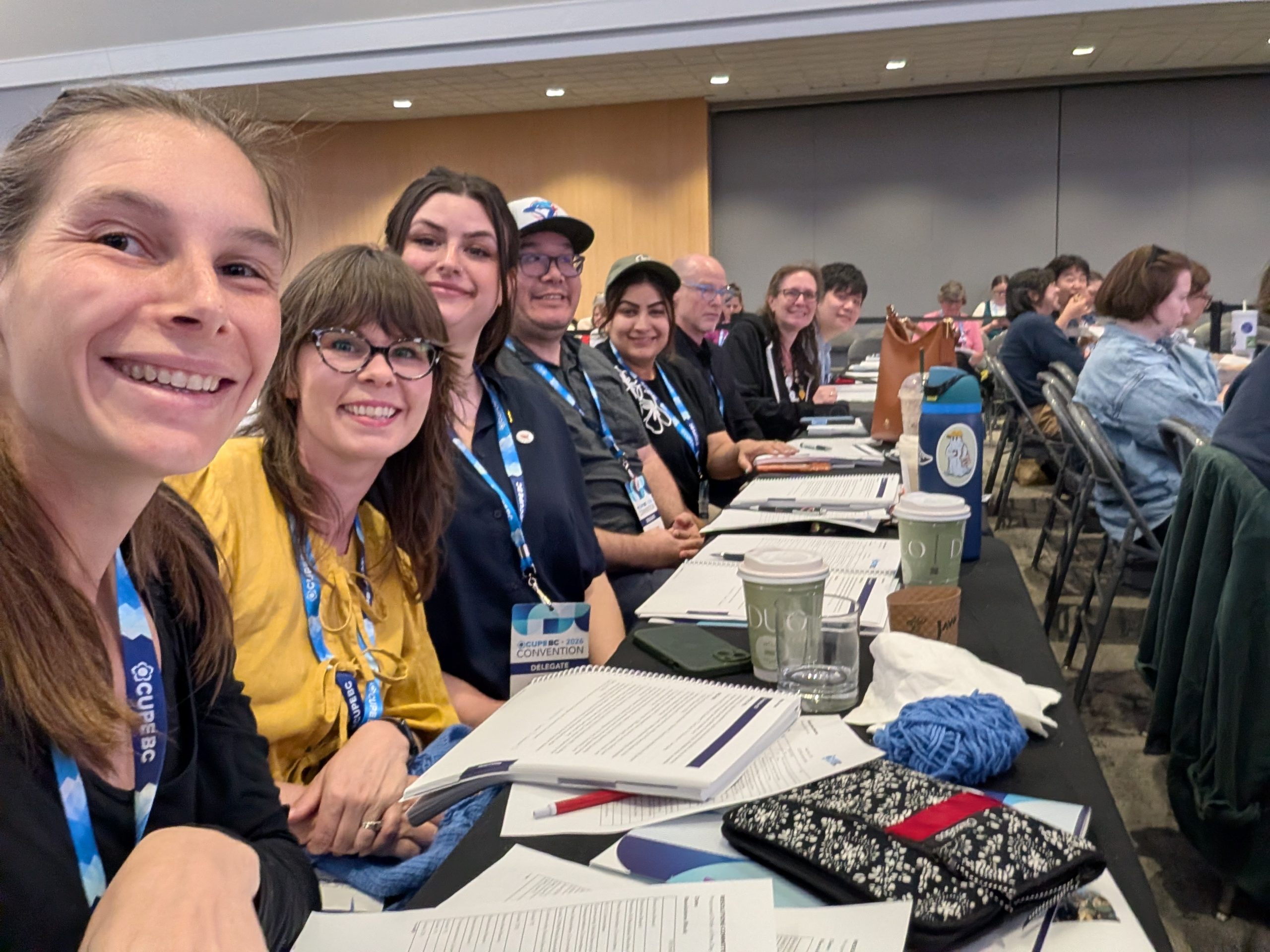
Attending the CUPE BC Convention as a delegate from CUPE 2950 at UBC was a meaningful and energizing experience. It was in Victoria, situated on the traditional territories of the Songhees and Xwsepsum (Esquimalt) Nations, the area holds deep cultural roots, and I was mesmerized by the spring beauty it offered. The fresh mornings provided a perfect and refreshing start to each day of the convention. From the very beginning, the convention created a strong sense of purpose and unity. I appreciated how the space was grounded in respect and inclusion, which carried through all the discussions and interactions over the course of the convention.
One of the most valuable parts of the experience was connecting with both familiar faces and new delegates. It was inspiring to hear how members from other locals have grown into leadership roles and strengthened their advocacy work within their communities. I also really appreciated the diversity in the room—each person brought their own lived experience, and it was powerful to see how those experiences shaped the way they engaged with different resolutions. It made the conversations feel real and deeply connected to the work we do every day.
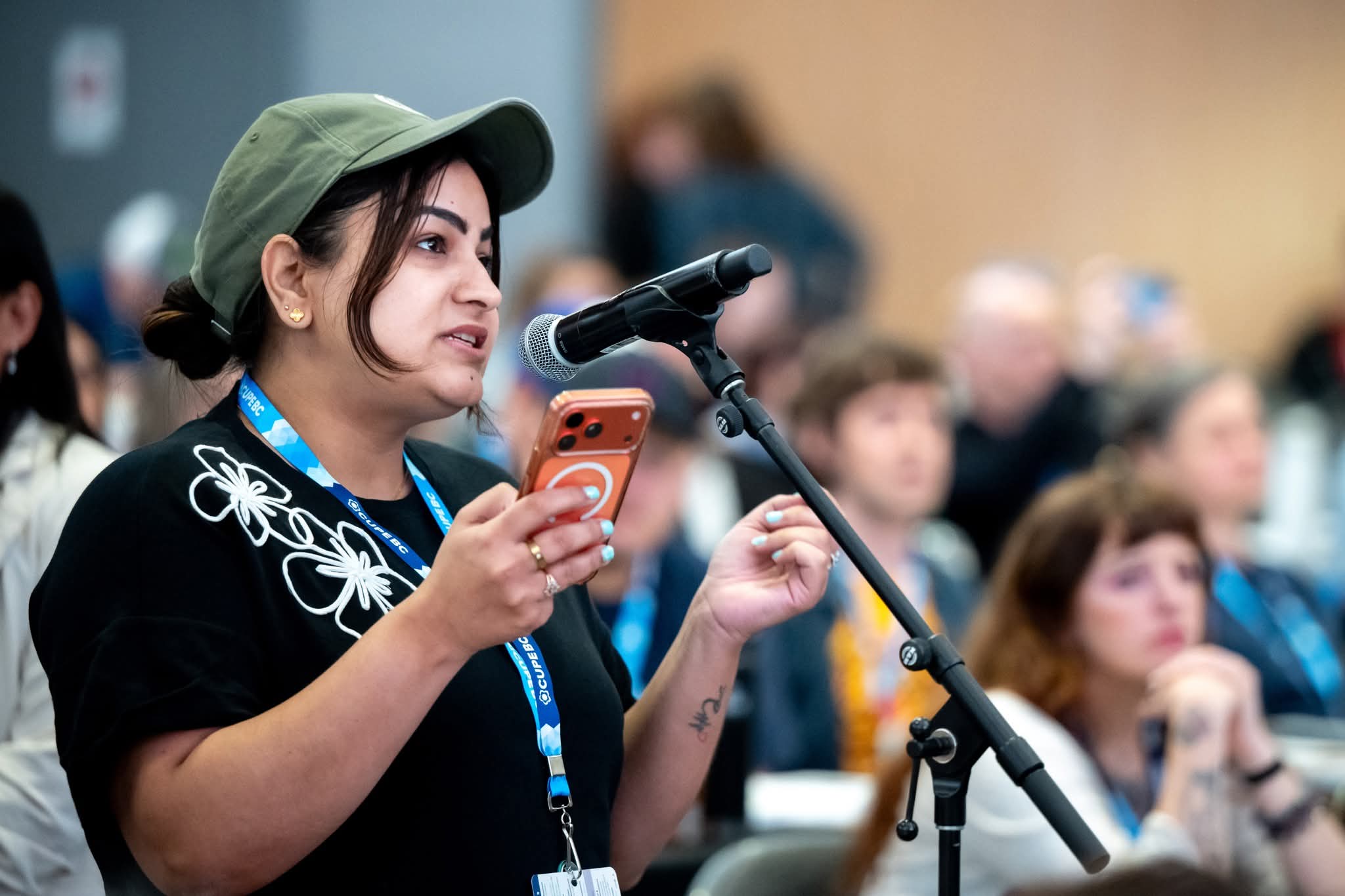
Throughout the convention, several discussions stood out as key takeaways for me. A strong focus across many conversations was the importance of equity, anti-racism, and ensuring that all workers feel safe and supported in their workplaces. This connected closely with my support for Resolution 65, which speaks to the realities faced by migrant and racialized workers. What stood out to me is how fear—whether related to immigration status or discrimination—can prevent workers from speaking up. That not only impacts those individuals, but it lowers standards for everyone. It reinforced for me how important it is that our union continues to take a clear and active stance against these systemic issues.
Another major takeaway for me was around childcare and how deeply it impacts workers’ ability to participate fully in their jobs. This is something I personally resonate with. Hearing others share similar struggles made it clear that this is not an isolated issue, but a widespread challenge. The lack of accessible and reliable childcare continues to force workers into difficult positions—whether that means delaying a return to work, reducing hours, or missing opportunities altogether. What stayed with me is the idea that childcare should not feel like a constant struggle or uncertainty, but something workers can depend on. Addressing this would have a direct and meaningful impact on fairness and equality in the workplace. It was really enlightening for me to see how this also connects to the pension piece and long-term impacts on workers.
I also found it valuable to hear broader conversations touching on worker well-being, job security, and long-term supports like pensions and safe working conditions. These discussions connected everyday workplace issues to bigger systemic changes, and reminded me how important it is to look at both immediate needs and long-term protections for workers.
The guest speakers were another highlight and brought a lot of energy into the room. Hearing from Premier David Eby, as well as labour leaders like the CUPE Saskatchewan President and the BCGEU President, was incredibly motivating. What stood out across all of their remarks was a shared message: when workers stand together and fight collectively, change happens. That message really boosted morale and reinforced the strength of solidarity within the labour movement.
Overall, the convention left me feeling motivated and more connected to the broader work of our union. It strengthened my understanding of the challenges many workers are facing, while also showing the power we have when we come together. I’m grateful for the opportunity to have attended, to have learned from others, and to bring these insights and connections back to CUPE 2950 as we continue to advocate for fairness, equity, and dignity for all workers.
In solidarity,
Ritika Nandwani
Diversity Chair Report
I recently had the privilege of attending the CUPE BC 2026 Convention and would recommend attending a convention to all members of our local.
As a first-time delegate, the convention was inspiring, enlightening, and, admittedly, a little overwhelming. The stories and debates that surrounded the many well-thought-out resolutions demonstrated the passion and commitment our fellow CUPE members have for the important topics which were brought forward.
As an advocate of EDI, I was extremely pleased to see the overwhelming support for resolutions condemning Residential School denialism, lobbying to declare gender-based violence a public safety emergency, increasing supports for 2SLGBTQIA+ members and community organizations who support them, and expanding supports and recognition for the deaf and hard of hearing community.
With over 500 attendees, I pushed past my intense fear of public speaking and spoke in support of two additional resolutions:
- Strengthen advocacy for public healthcare in BC, particularly those areas of the public health system that are chronically underfunded, and under resourced, including but not limited to rural health, long-term care, hospital and primary healthcare, comprehensive community health services, pharmacare, and mental health care.
- Lobby the provincial government to commit to longer term funding for school meal programs and work closely with the federal government to scale up funding.
The Convention reignited my passion for advocacy work, and I encourage any and all of our members to reach out to me if they would like any additional information, or would like to join our Diversity Committee.
In solidarity,
Christina Needham
Job Evaluation Chair Report
This year’s CUPE B.C. convention marks another great year of the province’s many public sector workers collaborating to further our common interests.
I am pleased to have been given the opportunity to meet Karen Ranalletta, President of CUPE B.C. and former President of CUPE 2950. I also got a chance to see many of the Executive Committee members of our local in-person.
The outlook for B.C.’s public service sector this year appeared mildly apprehensive. CUPE B.C.’s strike and defense fund is continuing its healthy recovery from the last 2014 K-12 strike from the Christy Clark era of underfunding schools and other essential public services. The province’s private sector has already been affected by changes in the global economy, and so there is unease that this loss of tax revenues will lead to a reduction in public service funding moving forward.
However, this projection for the upcoming times ahead have brought us closer together. Delegates from across the province voted nearly unanimously in support of our fight against some of the most pressing issues before us today: resisting against the threat of American Manifest Destiny geopolitics, demanding fairer wages in light of the rising cost of living, and fighting for the rights of workers, CUPE or otherwise, to organize and demonstrate job action to protect our dignity.
Interesting times are just beyond the horizon. When we stand united, we can overcome a great deal of challenges that await us.
In solidarity,
Philip Yu
Education Chair Report
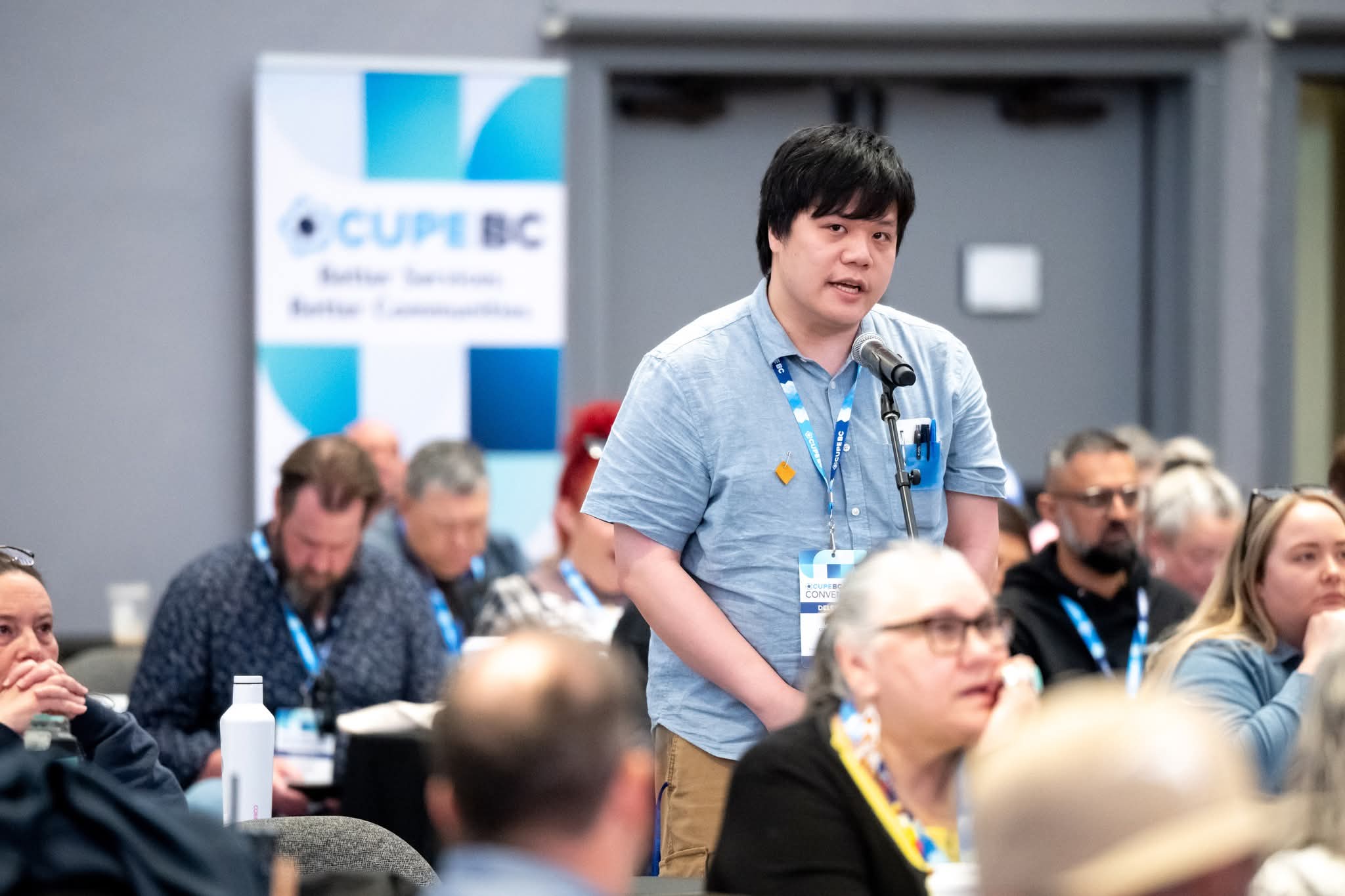
I was a first-time delegate at this year’s CUPE BC Convention, and found it to be a worthwhile learning experience overall. As a newly elected member of 2950’s executive, I didn’t know what to expect from a convention like this or what the format would include. It was powerful to be in the same space as hundreds of people from all over the province who are taking an active role in their locals, and who were eager to share their experiences and the various challenges they face across different sectors. A theme that stood out for me among many of the guest speakers was the importance of standing firm and united under increasing pressure. Various wins achieved through job action and solidarity between locals (the Air Canada strike being a popular example) were big points of discussion, and while worthy of celebrating, it was also made clear that the work is far from over when it comes to increasing the quality of life for workers in this province.
Education was front and center in many of the resolutions that made it to the floor. We heard from education assistants struggling with harassment and abuse in the classroom on a daily basis who are routinely told it’s just part of their job, while simultaneously facing a shortage of qualified workers in those positions. There were calls for increased support and protections for those workers, including a resolution to lobby the government for Recognition of Violence in the Classroom, and another to Set a Standard of Practice for Base Level Education Assistants. We also heard from members working at colleges and universities across BC and passed resolutions to Reinvest in Public Post-Secondary Education, seek Public Investment in Skilled Trades, Technical and Vocational Programs, as well as Lobby the Government for Recognition of Student Workers as Employees. The latter came from our sister local 2278, which submitted several resolutions that I was both impressed and motivated by.
While most resolutions were passed without too much back-and-forth discussion or differing opinions, I was moved to see a long line of delegates speaking in favour of a resolution to Continue Supporting the ARC Foundation, which brings SOGI 123 inclusive education to the K-12 school system in BC, after its importance was questioned during debate. It was a show of solidarity for the LGBTQ+ community, and an example of lived experience being used to educate and expand perspectives in real time.
One thing that I found a bit disappointing was the number of resolutions submitted, compared to the number that were given the time for discussion. Several resolutions submitted by individual locals that were focused on human rights and political action on an international scale – which may have inspired meaningful debate or education on the floor – were slated for the opening day of convention at a point in the agenda where it would not have been possible to get to them in the amount of time allotted. Some of those resolutions included Condemnation of Immigration Customs Enforcement (ICE), Continued Support of the Boycott, Divestment, Sanctions (BDS) Movement, Calling for an Arms Embargo, National Union Statement on Venezuelan Crisis, Public Statement in Solidarity with Unions in Minnesota, Allied Lobby on Iranian State Human Rights Violations and Crimes, Declare a Hot Cargo Edict and Endorse the Arms Embargo Now Campaign, and Lobby for the Withdrawal of Support for Working Definition of Anti-Semitism. I do feel that these kinds of resolutions are important to make space for and that regardless of geographical location, human rights abuses, war crimes and genocide affect all of us. We have a role to play as a strong union collective, as members of the working class, and as human beings.
I’m grateful for the opportunity to have attended the convention in Victoria this year, and feel inspired by the actions of other locals and the voices of their members. I would love to see 2950 submit some resolutions of our own next year and bring our voice to the floor, and I hope to keep learning more between now and then about how our local can push its provincial and federal counterparts to make meaningful change and show support for those who need it.
In solidarity,
Bailey Nicholson
President Report
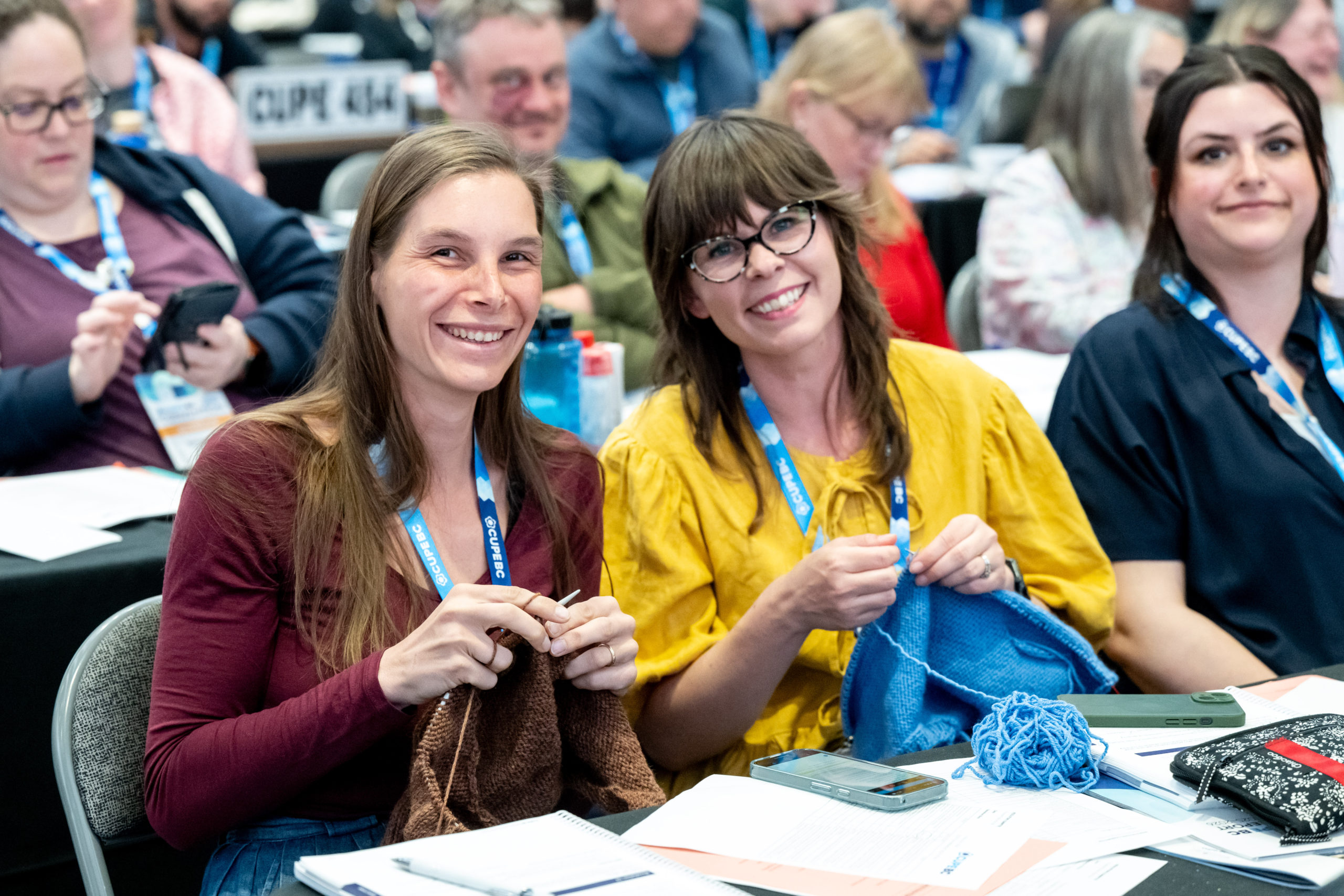
The CUPE BC Convention provided our delegates with the opportunity to hear from locals across the province about issues that matter most to them. The Environmental & Climate Justice committee passed Resolution 57 which calls for the government to monitor and regulate the environmental impacts of Artificial Intelligence (AI). Data centres are being built around the province that use clean municipal drinking water funded by taxpayers like us to cool systems, and there are also considerations around energy use, mining and electronic waste that are of concern. We called for disclosures around the impacts of AI technologies on jobs as well. Resolution 33 called on the government to invest in a unified, provincially-owned and operated public transportation system across British Columbia. We want to move privately operated transit systems into direct public operation so that better service is provided to transit users in communities across the province. Our current Translink Board of Directors is made up of individuals who do not necessarily take transit, and thus do not necessarily advocate for the needs of workers and transit users. A constitutional resolution was passed to recognize Young Workers (under 30 years of age) as an equity-seeking group, enabling the liaison position to be recognized as a Diversity Vice-President. Finally, our Environment Committee hosted an event that discussed the environmental impacts of Seamless Childcare implemented in public schools with CUPE members. Parents across the province are spending inordinate amounts of time commuting between childcare spaces, schools and work with their children, which increases fossil fuel usage. Clustering child care spaces on school grounds near communities and workplaces and providing families with the opportunities to use clean transportation (walking, biking, transit) to drop their children off just once during the day rather than ferrying them between school and other activities during their work day. Schools are built to be energy and climate efficient, so ensuring that child care spaces are included makes sense. The care economy needs to grow so that our province doesn’t continue to rely on mining and polluting industry jobs to keep our economy afloat. CUPE members in schools are ready to provide professional public child care and early childhood education. We just need our government to take action. A report published by the Coalition of Childcare Advocates of BC goes into details about this important initiative.
In solidarity,
Chloe Martin-Cabanne
Sergeant at Arms Report
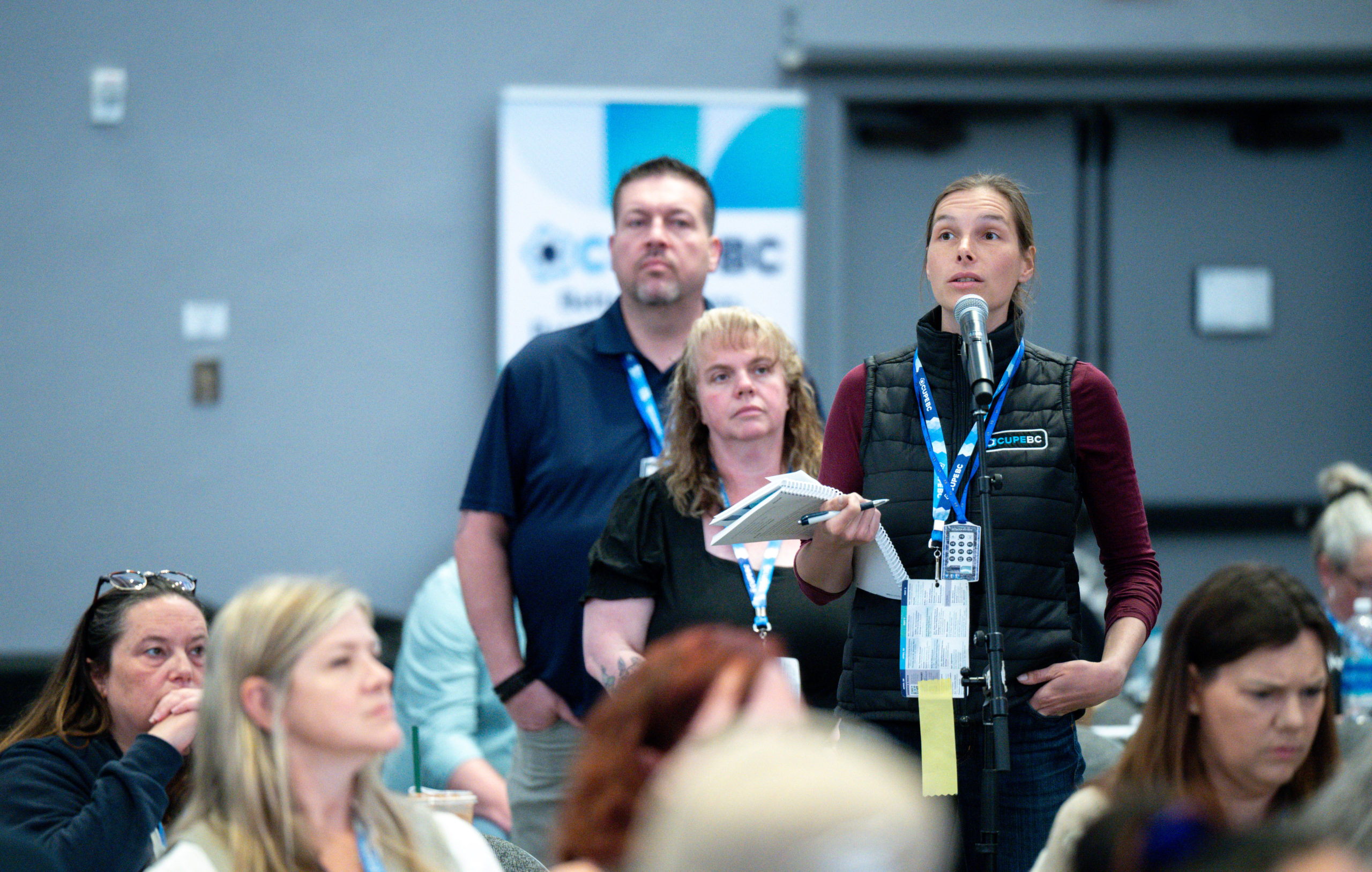
I volunteered to attend the CUPE BC Convention, and I’d do it again in heartbeat, after attending the recent CUPE National one this past fall, and becoming more involved with the Union. While the anxiety of convention that I had when I first attended one back in 2023 wasn’t there, I was still very excited for the experience.
It always a great chance to hear the guest speakers, vote on resolutions, and hear about the impacts, stories and rationales people had for supporting them. That being said, the conference wasn’t just about resolutions there were many talks, receptions and lunches. I got to meet some interesting people, enjoy the nice weather in beautiful Victoria.
In solidarity,
Kevin Veltheer


